Connecting AI to Your Business Systems Through MCP APIs: The Security Issues and the Practices That Work

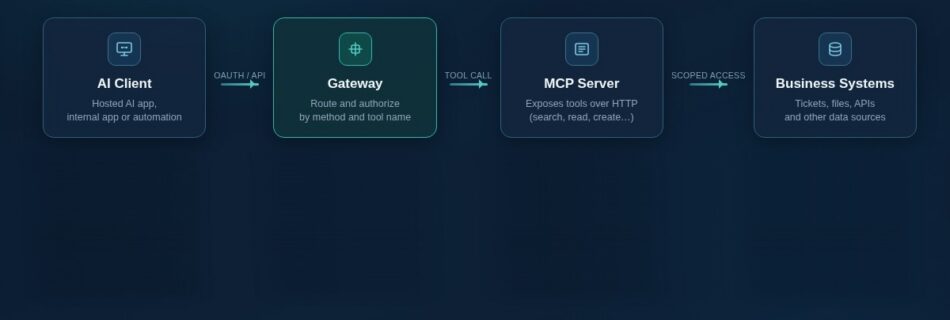
The short answer You can connect AI to business systems through MCP APIs and keep control, but only if the controls sit in your code, your identity provider and your network, not in the model’s judgment. The OWASP MCP Security Cheat Sheet puts the core issue plainly: “MCP lets LLMs decide which tools to invoke, …


Does Your AI Vendor’s Contract Protect Your Trade Secrets? Read Past the DPA

Terms as of Oct 20, 2026; vendors update terms often. Enterprise Unified Solutions (EUS) provides technical and vendor-risk assessments of AI tools and their contracts. EUS is not a law firm, and this article is not legal advice. Review contract, trade-secret, export-control, tax and ethics questions with your own attorney. This post is for IT …

China Proposes Export Controls on 23 AI Technologies: What US IT and Compliance Leaders Should Know

On Oct 16, 2026, two Chinese ministries published a draft that would add 40 technologies, 23 of them in AI, to the country’s list of technologies that are prohibited or restricted from export. The issuers are the Ministry of Commerce (MOFCOM) and the Ministry of Science and Technology (MOST), and the document is Announcement [2026] …

Model Context Protocol Securing AI access to data

MCP Servers and AI Agents: The Security Risks, and How to Govern Them

What MCP is Model Context Protocol (MCP) is a standard way to plug AI agents into tools and data. OWASP calls it “a universal interface layer, a ‘USB-C port for AI’”. An AI app such as Claude, ChatGPT, Copilot or Cursor connects to MCP servers, small programs that expose tools (search a mailbox, run a query) …

Before You Switch On AI, Check What It Will Run On

An AI assistant or automation does not arrive with its own copy of your business. It reads the records you already keep, acts with the permissions you already granted and follows the processes you already run. When those are tidy, it can take routine work off people’s desks. When they aren’t, it repeats the same …

Most Small Businesses Use AI. Few Have Built It In. That Gap Is Where the Payoff Is.

Two reports released this month point to the same conclusion: trying AI is easy, but making it part of how work gets done is the hard step, and that step is where the productivity gains come from. What the surveys found On March 17, Goldman Sachs released results from a 10,000 Small Businesses Voices survey. …

Growing With AI Without Growing Your Software Sprawl

The early signs of growing pains are familiar. A customer asks for a status update and nobody knows who handled the last one. Someone spends an afternoon rebuilding a history from old emails. A manager pauses their real job to walk a new hire through steps that exist only in their head. Each is minor. …

Do-It-Yourself AI: Four Ways It Goes Wrong, and the Controls That Prevent Them

At many companies, AI adoption starts with one person. Someone signs up for an assistant, gets useful results from a few prompts, shares it with a colleague, and within a month it’s part of how a team works. Nobody decided to adopt it. That path is fast and often works at first. The trouble is …

AI Is Speeding Up Attackers. Here’s What That Changes for a Mid-Sized Business.

This post is for owners, finance staff and office managers at mid-market firms, the people who approve payments, answer vendor emails and pick up calls from someone claiming to be the boss. Those roles are where AI-assisted attacks land first. What two recent reports show Attackers move faster. CrowdStrike’s 2026 Global Threat Report, released February …

Digital Transformation Is Mostly a People-and-Process Project

A decade ago, tools for automating paperwork, sharing real-time dashboards and keeping customer histories in one place were mostly sold to large enterprises. Today they come bundled in the subscriptions most mid-sized companies already pay for. Access isn’t the problem anymore. Getting them to change how work gets done is. What the largest companies are …