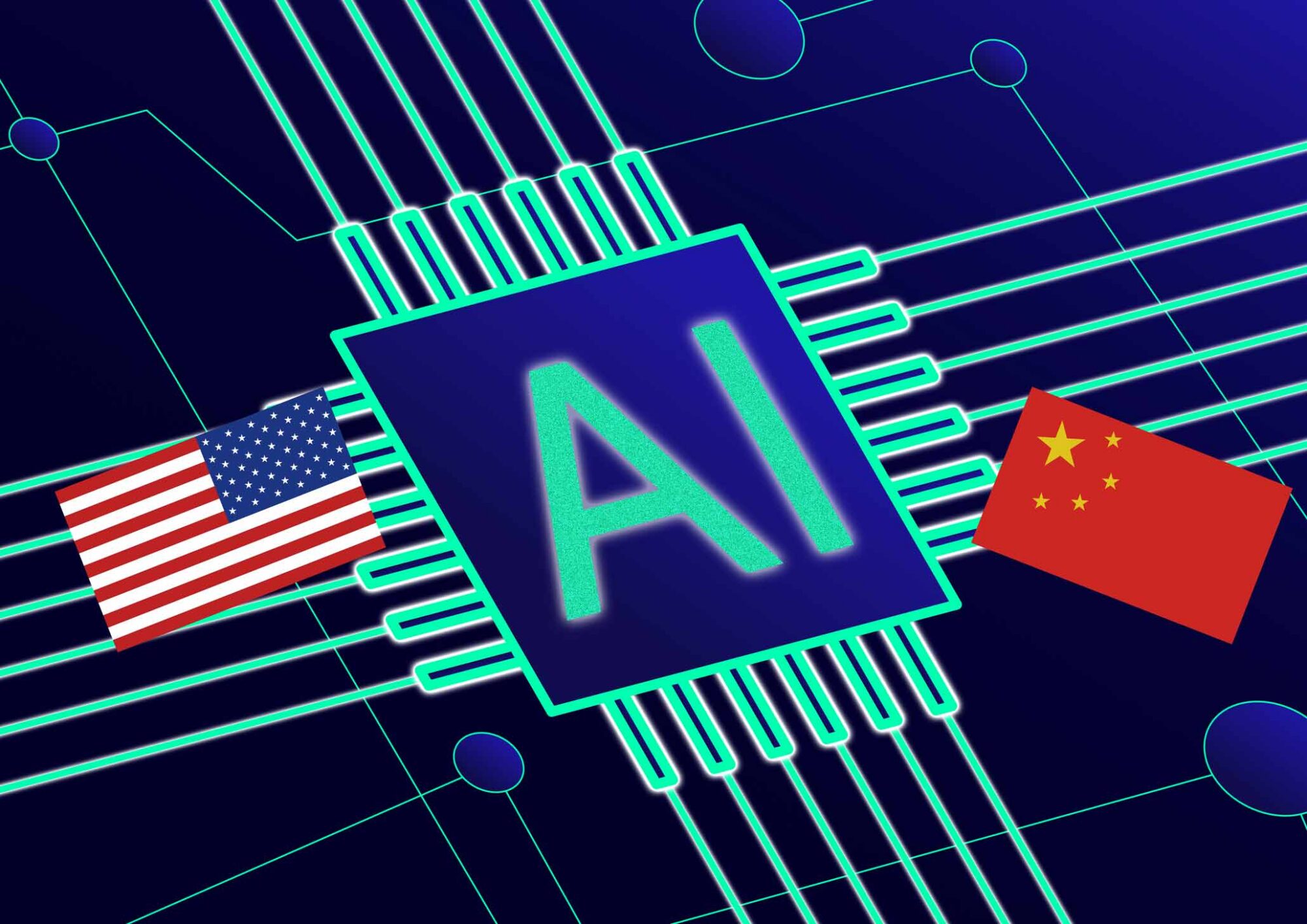
On Oct 16, 2026, two Chinese ministries published a draft that would add 40 technologies, 23 of them in AI, to the country’s list of technologies that are prohibited or restricted from export. The issuers are the Ministry of Commerce (MOFCOM) and the Ministry of Science and Technology (MOST), and the document is Announcement [2026] No. 48, according to Baker McKenzie’s client alert. Public comments are open until Nov 15, 2026.
Why should a US reader care about a rule that governs exports from China? If your company licenses Chinese-origin technology, runs a joint venture or R&D work with Chinese partners, or plans to run a China-developed model on your own servers, then the Chinese side of that arrangement may need to register or seek a license. That includes defense industrial base (DIB) manufacturers, the companies that supply the US military, if they work with Chinese suppliers.
What the draft covers
Baker McKenzie lists five AI areas: large models, AI agents, computing clusters, detection and countermeasure technologies (including cyber offense and defense), and information processing such as speech and voiceprint recognition and Chinese-language translation.
The draft uses two tiers. Prohibited technologies cannot be licensed for export at all. Restricted technologies need a license. Under China’s data security laws, “core data” is the most sensitive category, tied to national security. “Important data” is a step below it. Per Baker McKenzie, large models trained on core data would be prohibited, and models trained on important data would be restricted.
Per Baker McKenzie, a model can also be restricted if it meets any one of three technical thresholds. The first is training compute of 10^26 FLOPs (floating-point operations, a measure of the total computation used to train a model). The second is at least 2 trillion parameters. The third is globally advanced capability, for example a top-10 public benchmark ranking. The Decoder reports the same either-or logic.
The restricted tier also covers AI chip and advanced memory chip design technologies. It also includes large computing clusters, particularly those with 10,000 or more AI accelerator cards (GPU-style AI chips). Baker McKenzie adds that the prohibited tier covers agents used mainly in critical infrastructure, defense or core government systems, plus AI with strong cyber-offense capabilities.
As for counts, a summary posted on NVIDIA’s developer forums says the 40 technologies split into 23 AI, 5 biotech and 12 photovoltaic items, and into 14 prohibited and 26 restricted. That summary is a user post, not an NVIDIA statement; no other source repeats the tier counts.
How registration and licensing would work
Separately, under a temporary requirement, exporters must register with MOFCOM before exporting any listed technology from Oct 16, per Baker McKenzie. The firm notes that “registration does not itself amount to an approval or authorization.”
Leonhard Xu of the consultancy Sinolytics told The National that registration starts immediately, even for exports that have already begun shipping. He also cautioned that “export control does not equal an export ban” in most cases.
The draft also proposes “automatic licensing,” under which some restricted exports would be cleared essentially on filing. Examples include open-source releases and deployments where the Chinese party keeps control, such as its own overseas cloud. Baker McKenzie points out that this mechanism does not yet exist in China’s current framework and is expected to be defined in later rules or guidelines.
What’s out of scope, and what’s still unclear
API and SaaS access is not an export. Baker McKenzie, The Decoder, the NVIDIA forum summary and Emergent all say that using a China-hosted model through an API, an app or website, a SaaS product or a lightweight on-device version is not treated as a technology export. Deploying a restricted model on servers abroad is an export. The forum summary adds a useful caveat: falling outside this framework does not exempt an activity from other Chinese laws.
Already-public technology is excluded. Technology that is already public through open-source release or academic publication is outside the controls, per Baker McKenzie.
No effective date and no penalties. None of the six sources gives an effective date or describes penalties. The National reports that Beijing will review comments through Nov 15 before issuing a revised version.
Context
The National ties the draft to a fragile US-China trade truce. The paper says that last month the two countries agreed to cut tariffs on $30 billion of goods and start talks on AI. In the same article, Wendy Cutler, identified as a senior vice president at the Asia Institute, warned that a US response may only be a matter of time.
According to Emergent, the ministry says the measures are not aimed at any particular country, region or entity. Emergent also reports that Ryan Etzcorn of Ankura China Advisors described the move as more than routine maintenance and a signal that Beijing wants to protect areas where Chinese firms have gained ground.
Our take
This is a draft, and the important details are still open: how automatic licensing will work, when the catalogue would take effect, and what enforcement would look like. Don’t conclude you must stop using Chinese AI services; per the sources above, API and SaaS use is outside these controls.
What you also shouldn’t assume is that nothing applies yet. Per Baker McKenzie, registration has applied since Oct 16 and is not the same as approval; per Sinolytics, it reaches exports already shipping. Cubed’s explainer talks about parsing the draft line by line, and that is the right instinct for contracts and projects.
What this means for you
Questions to ask now:
- Do you export or deploy AI technology or model weights into or out of China? Running a China-developed model on your own infrastructure outside China is a different case from calling it through an API. (This draft governs technology leaving China.)
- Do you have Chinese-origin licensing, IP or joint-venture arrangements? Ting Peng of BZW Law told The National that registration may reach cross-border IP transfers, licensing deals and changes in ownership or control.
- Do staff travel with controlled technology? Baker McKenzie notes that technology export controls also matter for inbound and outbound investment and for individual travel involving technology transfer.
- Are you watching the Nov 15 comment window? The text could change after comments close.
- Have you routed this to export counsel? Ideally that includes counsel versed in Chinese law.
This post is not legal or export-compliance advice.
Enterprise Unified Solutions (EUS) is glad to talk these questions through with you.
Sources
- China Proposes Expanded Export Controls on AI, Biopharma and Solar Energy Technologies. Baker McKenzie, Global Sanctions and Export Controls Blog. Zhenyu Ruan, Frank Pan, Tina Li and Chris Jiang. Oct 18, 2026.
- China plans to tighten export controls on open-weight models and 23 key AI technologies. The Decoder. Matthias Bastian. Oct 16, 2026.
- China targets AI technology exports with new controls as US trade truce frays. The National. Alvin R Cabral. Oct 16, 2026; updated Oct 17, 2026.
- China proposes export controls on 23 AI technologies (including large models, agents & clusters). User post on NVIDIA’s developer forums by “paulsc.liu” (not an NVIDIA statement). Oct 16, 2026.
- China Proposes AI Export Controls on Models and Chips. Emergent. Author listed only as “Ketan.” Oct 16, 2026.
- China’s Draft Export Controls Cover 23 AI Technologies, From Weights to Agent Orchestration. Cubed blog. No author listed. Oct 17, 2026. Consulted for context; no facts drawn from it.